From May 26 to 29, 2025, the periodic technical review meeting of the Spoke 3 projects was held in Perugia. Nuclear Instruments contributed with a talk on machine learning and hardware acceleration for space-based detection, presenting advances in particle track reconstruction and low-energy gamma imaging within the Spartan and LEGIMaC projects.
Read More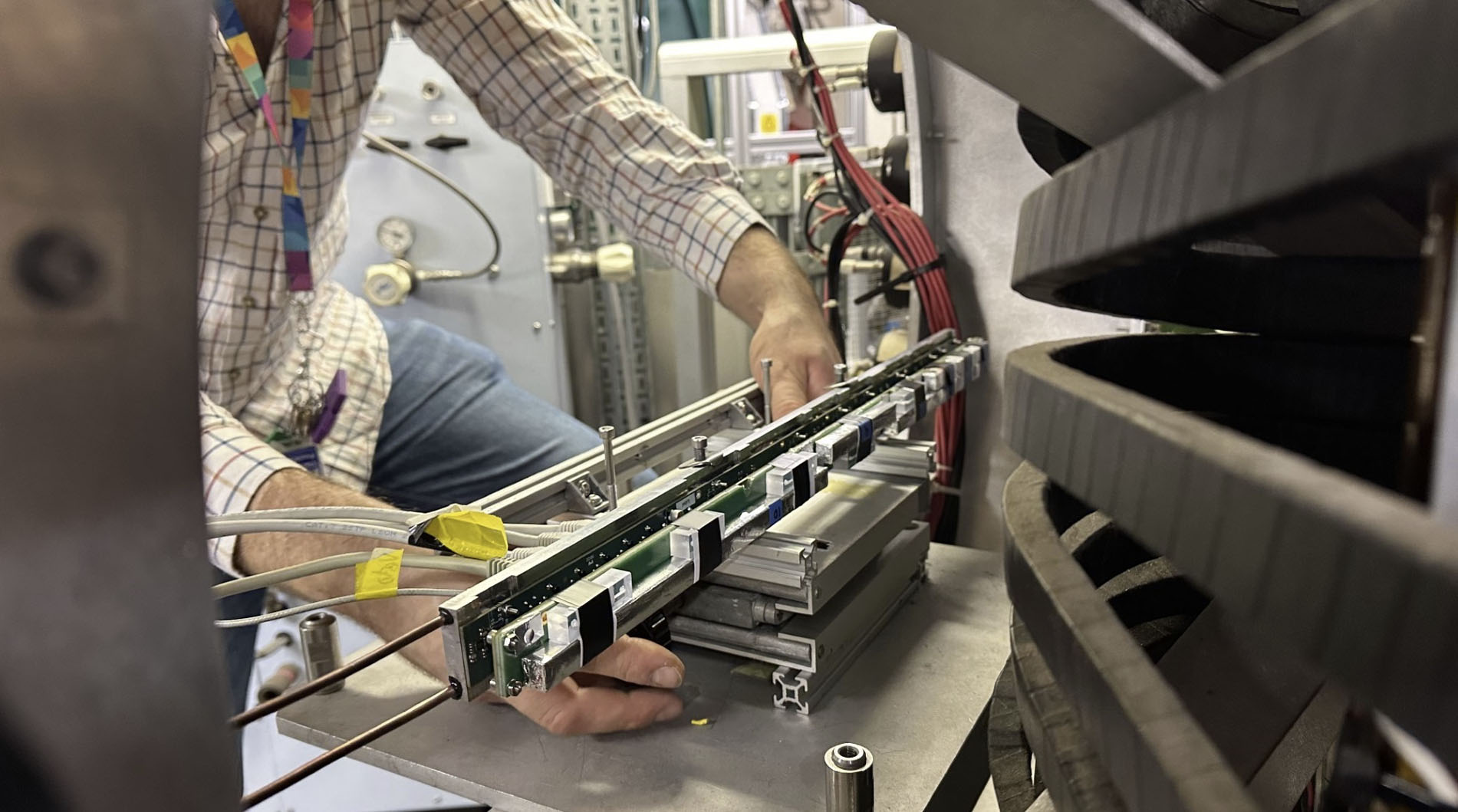
The Super-MuSR spectrometer leverages a 1D convolutional neural network embedded in FPGA to resolve event pile-up in real time, outperforming classical deconvolution and enabling robust hit identification at gigacount rates.
Read More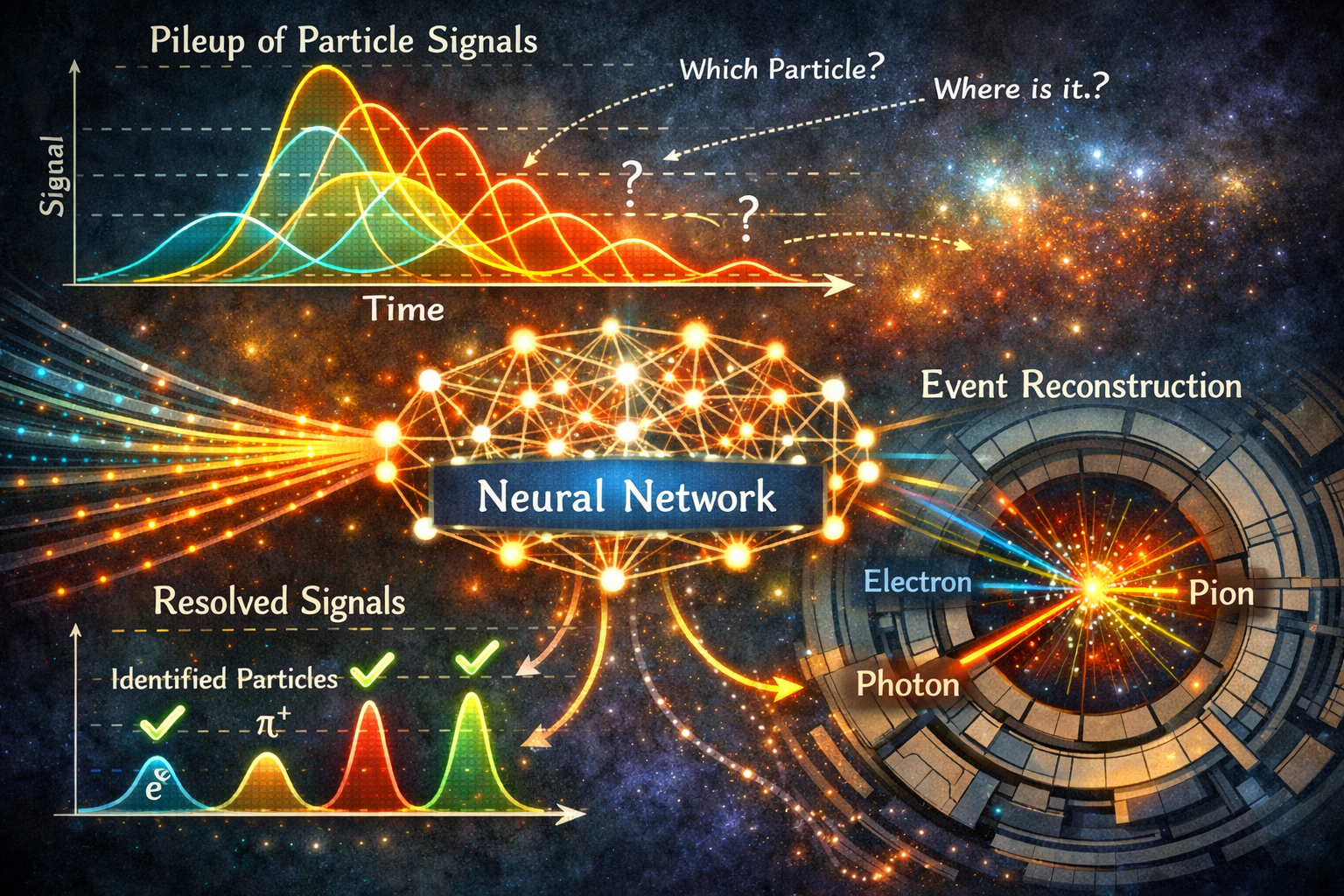
LEGIMaC (Low-Energy Gamma Imaging via Machine Learning in Calorimeters) is a PNRR-funded project that developed neural network-based algorithms for waveform analysis in SiPM-coupled scintillator calorimeters. By training 1D convolutional neural networks to distinguish scintillation events from dark noise and to resolve temporal pile-up, the project pushed detection thresholds to energies previously inaccessible, and demonstrated real-time FPGA deployment via HLS4ML at power levels compatible with space missions.
Read More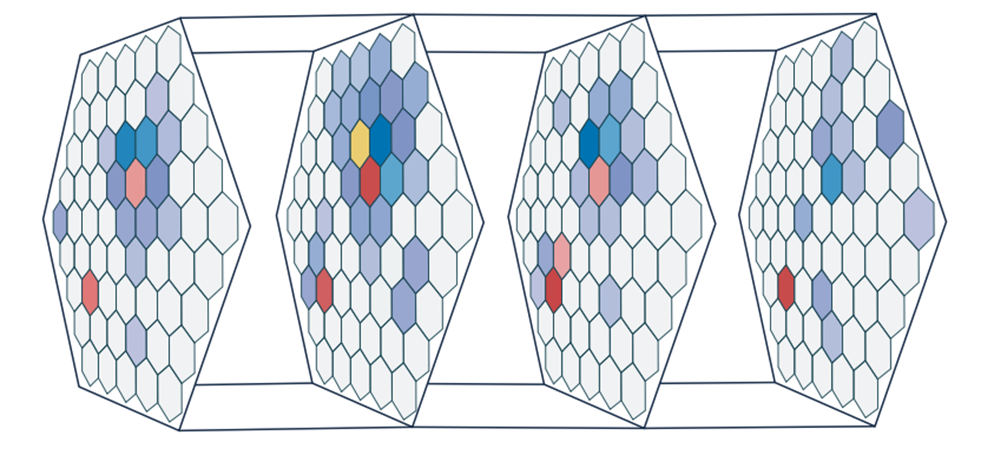
SPARTAN (SPace pARTicle trAcking with Neural-networks) is a PNRR-funded project that developed an innovative machine-learning-based system for tracking charged particles in space applications. By combining Graph Neural Networks, 2D Convolutional Neural Networks, and FPGA-based real-time inference, the project demonstrated the feasibility of intelligent on-board processing for future space missions under strict power and reliability constraints.
Read More